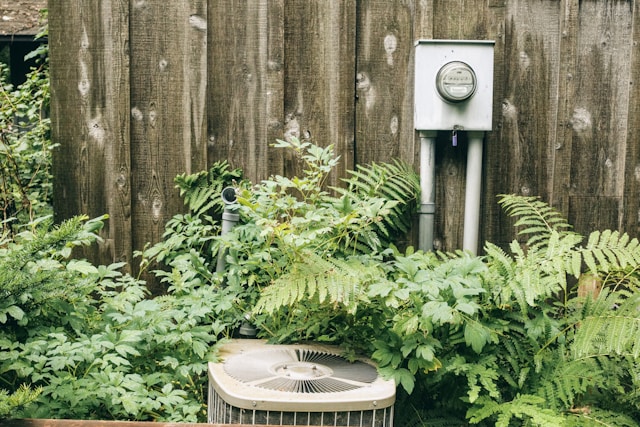
How Does My Air Conditioner Work?!
How Does an Air Conditioner Work? A Simple Guide for Homeowners
You walk into your home on a hot and humid day and enter a wonderful 72-degree home with only 50% humidity. Life is good! But how does it do that, and why is it important to know when it comes time for HVAC maintenance services? In this article, we will go over the function of a working air conditioner and explain the science behind the machine so you understand more at your next maintenance appointment.
The Biggest Misconception About Air Conditioning
A lot of people think their air conditioner works by blowing cold air into the house, but that’s not actually true. Your AC doesn’t create cold air. Instead, it takes heat from inside your home and moves it outside. What you feel is just air with less heat.
This is important because it affects how the system is built, how the refrigerant works, and why some issues can make your AC less effective.
Key Components of Your AC System
Before we look at how the refrigeration cycle works, it’s helpful to know the main parts. A typical split-system air conditioner has two units: one inside and one outside. Each has four main components:
Compressor (Outside)
This is the system’s engine. It pressurizes and moves the refrigerant through the cycle.
Condenser coil (Outside)
This part releases the heat taken from your home into the outside air.
Evaporator coil (Inside)
It absorbs heat from the indoor air as warm air moves over it.
Blower motor (Inside)
It moves indoor air over the evaporator coil so the heat can be absorbed.
How Your Air Conditioner Works
Here’s how a typical air conditioning cycle works:
Step 1: Warm air from your home enters the indoor unit. The blower motor pulls this air across the evaporator coils.
Step 2: The blower motor continues to draw warm, humid air from your home across the evaporator coil.
Step 3: The evaporator coil absorbs heat from the air. The refrigerant inside the coil is cold and at low pressure. As warm air passes over the coil, the refrigerant absorbs the heat and changes into a gas.
Step 4: The cooled air is sent back into your home. Once the heat is removed, the air feels cooler as it’s blown into your rooms. Moisture in the air also collects on the cold coil and drains away, which is why your AC helps lower humidity.
Step 5: The refrigerant, now carrying heat, moves to the outdoor unit. The compressor then pressurizes it into a high-pressure, high-temperature gas.
Step 6: The condenser coil releases the heat outside. The hot refrigerant moves through the coil, and the outdoor fan blows air over it to help carry the heat away. The refrigerant then cools down and turns back into a liquid.
After that, the cycle starts again. The liquid refrigerant passes through an expansion valve, which quickly lowers its pressure and temperature. This prepares it to absorb heat again at the evaporator coil. The process repeats until your thermostat reaches the temperature you set.
What This Means for HVAC Maintenance Services
Knowing how the refrigeration cycle works helps common HVAC maintenance advice make more sense and makes it easier to find the right HVAC maintenance services:
Keep the condenser coil clean. If the outdoor coil is dirty, it can’t release heat efficiently. This makes the whole system work harder and can shorten its lifespan.
Change air filters regularly. When a filter is clogged, it restricts airflow over the evaporator coil. This reduces how much heat the system can absorb each cycle and can even cause the coil to freeze.
Don’t ignore refrigerant problems. If your home isn’t cooling as well as before, or you hear a hissing sound near the unit, call a technician to check for leaks before the compressor gets damaged.
Schedule regular tune-ups. Having your system checked once or twice a year helps make sure all parts, like the compressor, coils, fan motors, and refrigerant, are in good shape before the busy season.
HVAC Maintenance Services
If your AC isn’t cooling like it should, schedule your HVAC maintenance services with AeroDS today!
- Blog
- Community Happenings
- Energy Savers
- Health Benefits
- How to know the problem
- HVAC Problems
- Installation
- Maintenance
- Most Popular
- Projects
- Repair Tips