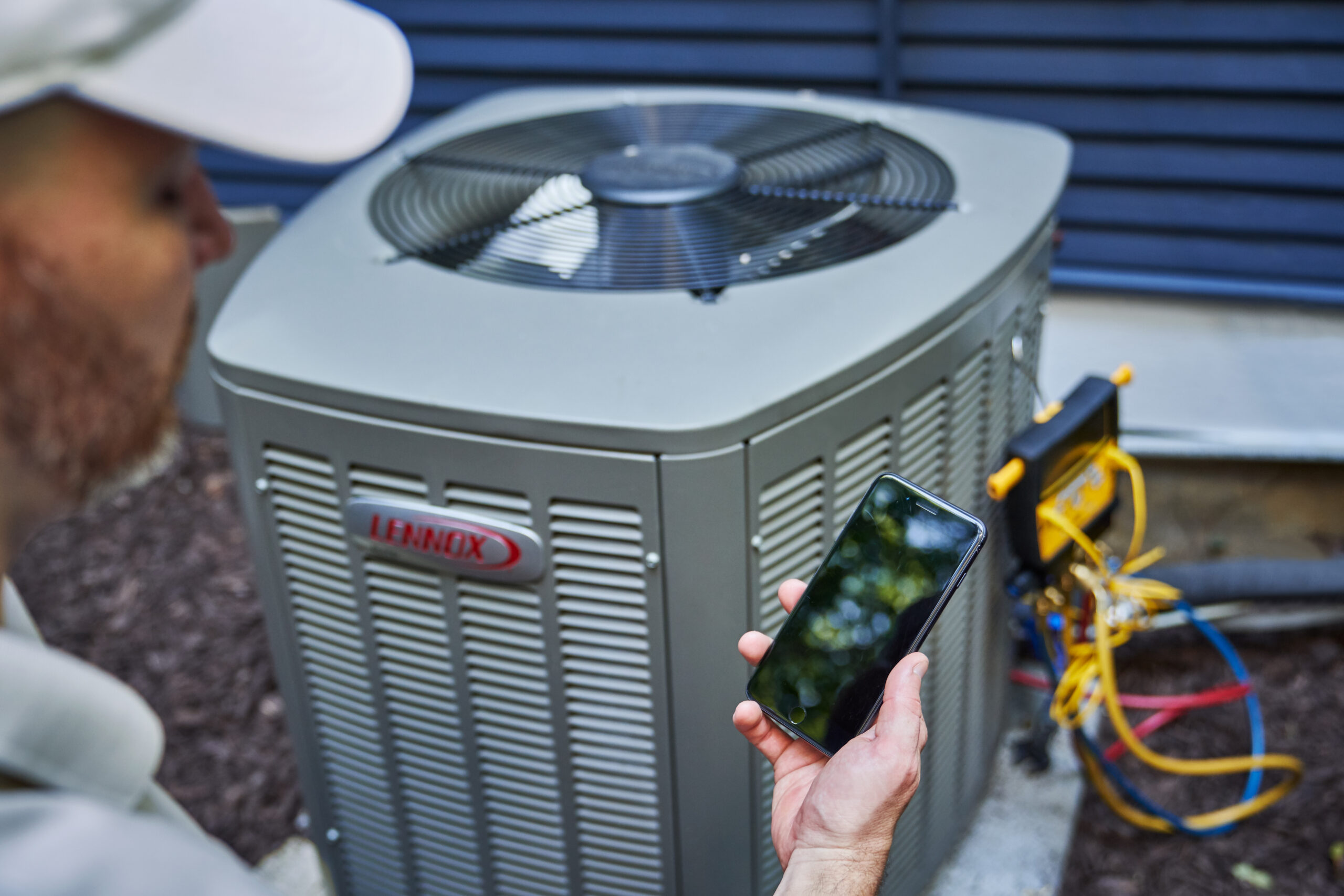
AC Not Cooling? Homeowner A/C Checks Before Calling the Techs
It’s the middle of the afternoon, and your house feels warmer than usual. You check the thermostat and see that the temperature is going up. That’s when you realize your air conditioner might not be working, and you start worrying about repair costs. Before you call a technician, though, it could be something simple you can fix yourself. Here are a few steps to try that might save you money.
Part 1: Thermostat and electrical checks
Start here before touching anything else. Most AC “failures” are caused by a tripped breaker or an incorrectly set thermostat.
- Check the circuit breaker
Locate your electrical panel and look for the breaker labeled for the AC or air handler. If it has tripped (flipped to the middle position), switch it fully off, then back on.
If the breaker trips again after resetting it, do not try again and stop. This could indicate a high-voltage short in the system. It is time to call a technician out to get your AC cooling system working again. Further attempts could damage your equipment or create a safety hazard.
- Make sure the thermostat is set to “Cool” mode
If the mode is set to “Heat,” “Fan Only,” or “Off,” switch it to “Cool.” Then wait 30 minutes to see if the temperature drops.
- Verify the set-point is below room temperature
The thermostat only calls for cooling when the set-point is lower than the current indoor temperature. Lower the set-point by at least 3–5°F and wait 30 minutes.
- Check for a blank thermostat display and replace the batteries
Many thermostats run on AA or AAA batteries. If the screen is blank, replace the batteries first. After swapping them, reset the mode and set-point, then wait to see if the system comes on.
Part 2: Water leak and drain line checks
Seeing water dripping from vents, pooling near your indoor unit, or coming through the ceiling? A clogged condensate drain line is the most common cause — and it is usually preventable.
- Inspect the condensate drain line for a clog.
Locate the PVC drain line near your indoor unit (air handler or furnace). Look through the vent opening: if water is backing up and filling the line, it is clogged. The p-trap should have a small amount of water sitting at the bottom, but the horizontal run of the pipe should be dry. If water is standing in the horizontal section, the line is blocked.
How to clear a blocked drain line
- Disconnect the drain line at the nearest union or access point.
- Blow firmly through the line toward the outdoor discharge point to dislodge the blockage.
- Reconnect all fittings securely before turning the system back on.
- Prevent future clogs by pouring a cup of plain bleach down the drain line every 3–6 months.
- If you cannot clear the line, call Aero Designed Systems.
- If the drain is clear but water is still leaking. Call a tech!
A clear drain line with water still present indicates either a cracked or rusted condensate pan or a frozen evaporator coil. Both require a technician’s diagnosis to confirm and repair safely.
- One more thing: change your air filter
A dirty air filter restricts airflow and is one of the most common causes of AC inefficiency, freezing coils, and water leaks. If you cannot remember the last time you changed it, change it now. Most standard 1-inch filters should be replaced every 30–60 days in Texas summers.
Frequently asked questions
Why does my AC breaker keep tripping?
A breaker that trips repeatedly indicates a high-voltage short somewhere in the system, possibly a failing compressor, a grounded wire, or an overloaded circuit. Do not keep resetting it. Call an HVAC technician to diagnose the cause before running the system again.
Why is water dripping from my AC vents or ceiling?
The most likely cause is a clogged condensate drain line. When the drain is blocked, water backs up and overflows the drip pan, eventually reaching the ceiling or floor. A cracked pan or a frozen evaporator coil are two other possible causes that require professional diagnosis.
How do I know if my AC problem requires a technician?
Call a technician if: the circuit breaker trips more than once, the thermostat display stays blank after checking batteries and wiring, the drain line is clear, but water is still leaking, or the system runs but produces no cool air after 30 minutes.
AC not cooling? We can help.
If your AC still isn’t cooling after a few DIY tips, call Aero Designed Systems. We serve Lakeway, Georgetown, and the surrounding area. Call us now!
- Blog
- Community Happenings
- Energy Savers
- Health Benefits
- How to know the problem
- HVAC Problems
- Installation
- Maintenance
- Most Popular
- Projects
- Repair Tips